
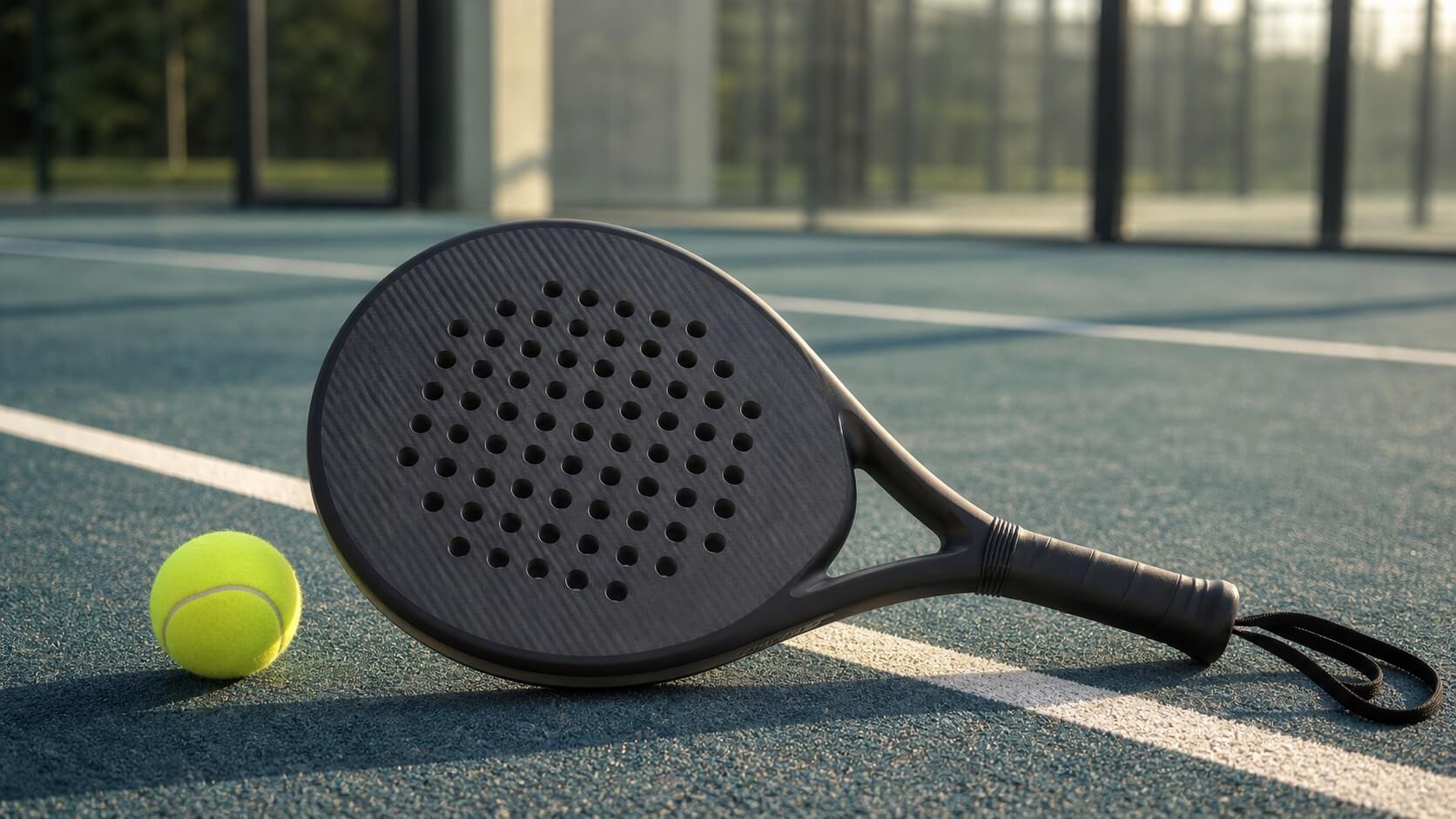
A padel racket and a pickleball paddle are not the same piece of equipment. A padel racket has a perforated face and is designed for padel’s enclosed court, rebound walls and sport-specific ball. A pickleball paddle has a solid striking face and is used with a perforated plastic ball on a badminton-sized court. Both products may use carbon fiber, fiberglass and polymer materials, but their shape, construction, rules and playing feel are different.
For players, the correct choice is simple: use equipment made for the sport you play. For retailers and custom product buyers, specify the governing standard first, then define the mold, face, core, weight, balance, artwork and test requirements.
Key Differences at a Glance
| Feature | Padel racket | Pickleball paddle |
|---|---|---|
| Striking face | Perforated with multiple holes | Solid face without through-holes |
| Ball | Pressurized padel ball | Perforated plastic ball |
| Court context | Enclosed court with playable walls | Open court with a non-volley zone |
| Common shape | Round, teardrop or diamond | Traditional, elongated or hybrid paddle outlines |
| Product standard | FIP Rules of Padel and event requirements | USA Pickleball or relevant governing-body standards |
Racket or Paddle: The Correct Terms
In English, padel equipment is normally called a padel racket, while pickleball equipment is called a pickleball paddle. Searches such as “padel vs pickleball racket” are common, but using the correct product name helps buyers communicate clearly with manufacturers, testing organizations and customers.
The terminology also prevents a costly sourcing mistake. A supplier request that says only “carbon racket” or “composite paddle” is incomplete. The sport, target standard and intended market should appear at the top of the product brief.
Face Design, Holes and Construction
Why Does a Padel Racket Have Holes?
The perforated face is a defining part of a padel racket and its regulatory design. Hole layout, frame geometry, face material and internal foam work together as a complete structure. A production mold should therefore be designed and validated as a padel racket, not created by drilling holes into a paddle intended for another sport.
Why Is a Pickleball Paddle Solid?
A pickleball paddle uses a solid striking surface, while the ball itself contains holes. The face may use raw carbon fiber, fiberglass or another permitted surface system over a core. Surface treatment, deflection and other characteristics must comply with the rules of the target governing body.
Internal Construction
Both products may be described with similar material words, including carbon fiber, fiberglass, foam and polymer. That does not make their construction interchangeable. Padel rackets commonly combine a perimeter frame, foam core and laminated perforated faces. Pickleball paddles commonly use a flat core and solid face assembly. The intended impact, geometry and test methods are different.
Court and Game Differences
Padel is played on an enclosed court where the walls remain part of live play. The current FIP Rules of Padel define the court and equipment requirements used for the international game. Positioning, overhead play and rebounds influence why padel rackets are built in round, teardrop and diamond shapes.
Pickleball is played on a 20-by-44-foot court with a seven-foot non-volley zone on each side of the net, according to USA Pickleball. The shorter paddle, perforated ball and kitchen rules create a different combination of touch, volley and groundstroke requirements.
These game environments should guide product choice. A padel buyer may prioritize sweet-spot location, maneuverability around the glass and balance for overheads. A pickleball buyer may prioritize paddle length, face feel, core thickness and compliance for the intended tournament market.
Size and Equipment Standards
Official rules should be checked at the start of product development, not after a production sample is complete. Requirements can change, and different markets may use different approval systems.
The current USA Pickleball Equipment Standards Manual limits the combined length and width of a paddle to 24 inches and the paddle length to 17 inches. The standard also covers materials, surface characteristics, testing and approval. A commercial paddle intended for sanctioned play should be developed against the current manual and submitted through the applicable approval process.
Padel rackets should be checked against the current FIP rulebook and the requirements of the target competition or market. Do not assume that a visually similar mold, hole pattern or safety cord automatically complies.
Materials and Playing Feel
Carbon Fiber
Carbon fiber can create a firmer, more direct response in either product, depending on the fiber grade, layup, resin, core and total construction. The words “carbon fiber” alone do not predict feel or quality. Buyers should request a complete material specification and test a representative sample.
Fiberglass
Fiberglass is often selected when a softer, more forgiving response or different cost target is needed. Hybrid face constructions can combine materials to tune feel, durability and price. Read our comparison of carbon fiber vs fiberglass padel rackets for more detail.
Weight and Balance
It is not accurate to say that every padel racket is heavier than every pickleball paddle. Product ranges overlap and models vary. Compare the actual weight, balance point, swing feel and player segment model by model. For padel, our guide to padel racket types explains how round, teardrop and diamond shapes change the general balance and sweet-spot position.
Can You Use a Padel Racket for Pickleball?
For sanctioned play, use equipment that complies with the rules of the sport. A padel racket is not a compliant substitute for an approved pickleball paddle, and a pickleball paddle is not designed as a padel racket. Even for casual play, substituting one for the other changes the response, reach, surface and safety characteristics.
If you are new to padel, start with the padel racket buying guide and choose the shape, weight and material for your level. A round shape is often a practical beginner-friendly starting point, while teardrop and diamond models serve different balance and performance preferences.
OEM and Private-Label Buyer Checklist
Retailers, clubs and brands should create separate product briefs for padel and pickleball. Each brief should include:
- Sport and target market: name the governing standard and countries where the product will be sold.
- Shape and dimensions: specify the padel mold or pickleball paddle outline, handle and edge dimensions.
- Face system: define carbon, fiberglass or hybrid layers, texture requirements and printed finish.
- Core construction: record material, density or thickness targets and bonding process.
- Weight and balance: set a target range and tolerance for each SKU.
- Artwork: provide vector logos, color references, finish, serial marking and packaging files.
- Testing and approval: identify performance, durability, chemical, labeling and sport-governing tests.
- Sampling and quality control: approve a physical sample and define production inspection criteria before mass production.
For a padel collection, compare our round, teardrop and diamond product directions. The main padel racket page provides an overview of Vinova’s custom program.
Develop a Custom Padel Racket
Vinova can discuss shape, face material, core, weight, balance, finish, logo and packaging options for custom padel racket projects. Product feasibility and final specifications are confirmed through sample development.
Contact Vinova with your target market, preferred shape, quantity, material and artwork requirements.
Frequently Asked Questions
Is a padel racket the same as a pickleball paddle?
No. A padel racket has a perforated face and is designed for padel, while a pickleball paddle has a solid face and is designed for pickleball. They follow different equipment rules.
Why are there holes in a padel racket?
The holes are part of the sport-specific design and FIP equipment specification. Their placement must be considered together with the frame, face laminate, core and safety requirements.
Can I use a pickleball paddle for padel?
It is not recommended and it is not a compliant substitute for sanctioned padel. The shape, face, construction and intended ball-and-court system are different.
Which is heavier: a padel racket or a pickleball paddle?
There is no universal answer across all models. Weight ranges and balance vary, so compare the specifications of the exact products rather than relying on the sport name alone.
Can Vinova customize padel rackets?
Yes. Vinova can discuss available shape, material, balance, finish, logo and packaging options. Final construction and production feasibility are confirmed during specification review and sampling.